-
This letter forms part of a disciplinary procedure when an employee’s conduct is unsatisfactory. This letter would normally be the fourth stage in a five stage disciplinary process. Usually the disciplinary process is: informal verbal warning, formal verbal warning (Verbal Warning Confirmation Letter (misconduct)), first written warning (First Warning Letter (misconduct)), final written warning and then potentially summary dismissal. This letter is used when an employee has either failed to improve following the earlier stages of the disciplinary process, or if they have behaved in such a way that means that the earlier stages of disciplinary action are disproportionate when compared to their behaviour. This letter is essentially a final warning to the employee that if they fail to correct their behaviour, then further disciplinary action and possibly dismissal may follow.
-
To be used as part of a company’s disciplinary process. In the event that informal verbal warnings about an employee’s conduct have failed to correct it, a company would escalate the matter to the first written warning stage. This is the first stage of formal disciplinary action. It is normal for a company to issue a first written warning, then a final written warning then move to dismissal. In some cases an employee’s actions may be so serious that informal action is not appropriate and it may be deemed suitable to move straight to a written warning.
-
This letter forms part of a disciplinary procedure when an employee’s performance is unsatisfactory. This letter would normally be the fourth stage in a five stage disciplinary process. Usually the disciplinary process is: informal verbal warning, formal verbal warning (Verbal Warning Confirmation Letter (poor performance)), first written warning (First Warning Letter (poor performance)), final written warning and then potentially summary dismissal. This letter is used when an employee has either failed to improve following the earlier stages of the disciplinary process, or if they have behaved in such a way that means that the earlier stages of disciplinary action are disproportionate when compared to their behaviour. This letter is essentially a final warning to the employee that if they fail to improve their performance, then further disciplinary action and possibly dismissal may follow.
-
This policy is for employees to follow should they be unhappy about an aspect of their employment and wish to raise a complaint. This policy sets out how the employee should go about raising a formal complaint (or grievance) with the employer. An employee raising a formal grievance should do so in writing to management.
-
To be used as part of a company’s disciplinary process. In the event that informal verbal warnings about an employee’s performance have failed to improve it, a company would escalate the matter to the first written warning stage. This is the first stage of formal disciplinary action. It is normal for a company to issue a first written warning, then a final written warning then move to dismissal. In some cases, an employee’s performance may be so poor that informal action is not appropriate and it may be deemed suitable to move straight to a written warning.
-
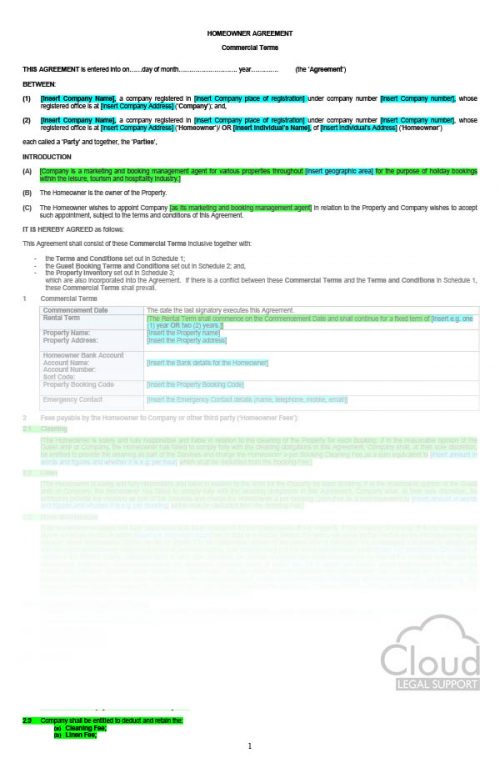
This agreement is used when a homeowner is engaging the services of a third party to market their property for them in respect of short-term holiday lets. It sets out the respective responsibilities of the homeowner and the third party. It includes the following terms:
- the Homeowner Commercial Terms and Terms and Conditions at Schedule 1;
- the Guest Booking Terms and Conditions set out in Schedule 2;
- the Property Inventory set out in Schedule 3; and
- the Data Processing Addendum set out in Schedule 4
-
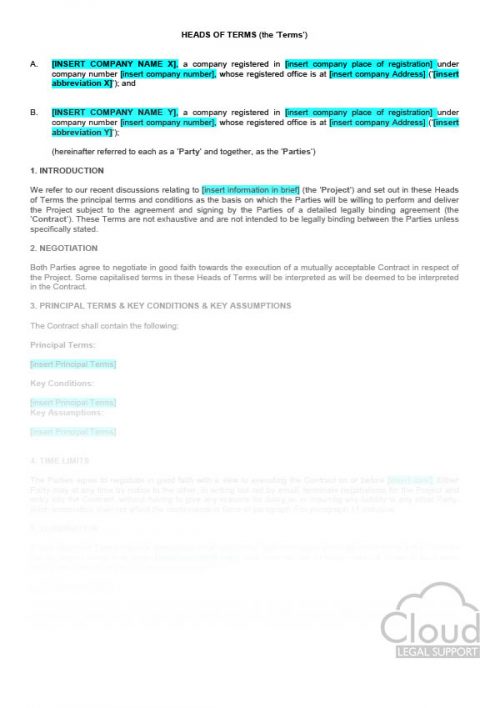
This document should be used where two parties have begun negotiations but haven’t entered into any formal agreements. They are used to outline the terms of a commercial transaction where certain terms or aspects of the deal have been agreed in principle during initial discussions or negotiations. These Heads of Terms are not legally binding (unless expressly specified) and neither party is compelled to enter into an agreement on the terms in the Heads of Terms, or at all.
-
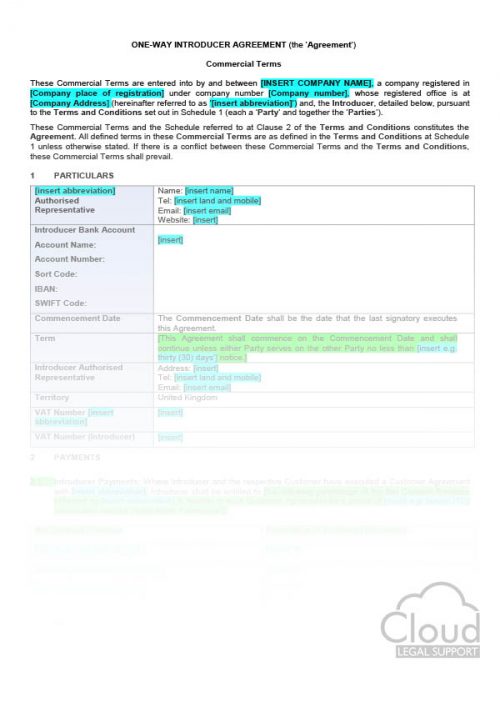
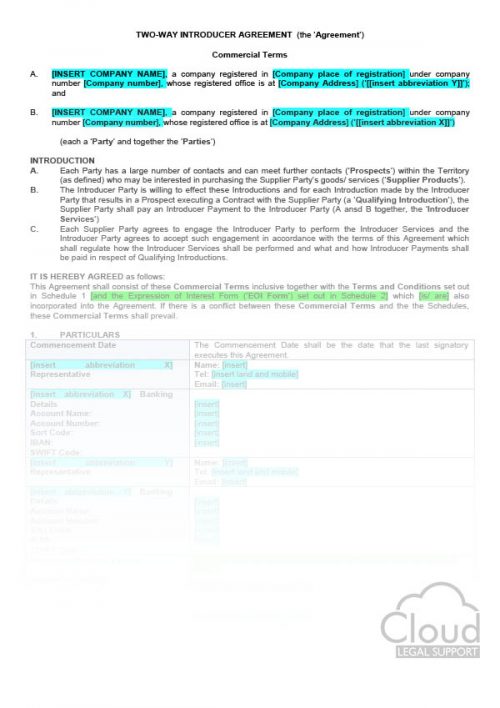
To be used when a business is referring new customers to another business. This sort of arrangement is common where a business’ customers may benefit from the services offered by another business. The business may direct (or introduce/ refer) the customer to that business and claim a fee for doing so. This agreement sets out how the arrangement will work. Fees payable are contingent upon the Prospect contracting with the Company as a result of the Introduction made by the Introducer.
-
This document should be used to offer someone a job following an interview. It should be accompanied with either a contract of employment or terms of employment.
-
-
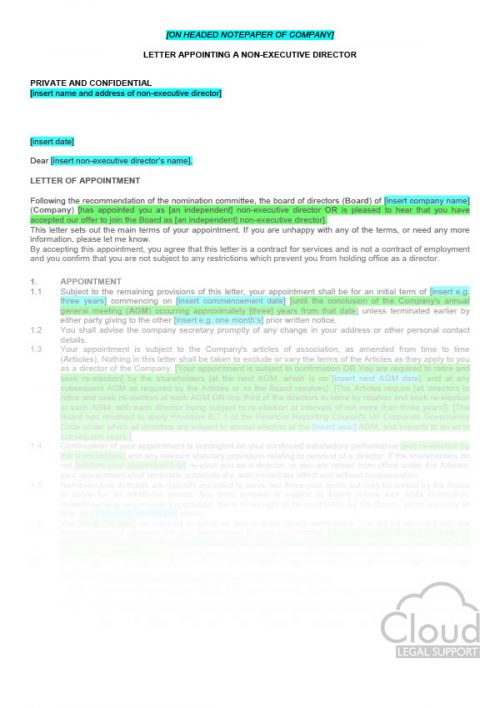
This document is used to appoint a non-executive director to the company’s board of directors. It is a contract for services, not a contract of employment; if the non-executive director is to be employed by the company then a contract of employment needs to be used. It sets out the main terms of appointment.
-
This document is used when Business A has developed a mobile app for public use. This app is downloaded from an online source such as iTunes App Store. This document sets out how Business A will use any personal or sensitive information as a result of people using the App.Due to the receipt of continued guidance from the Information Commissioner, this policy is frequently updated. When we make a change and substitute the current template, we will send you a notification so you can ensure yours is up to date.